
Total Life Sync
OMAD: What Happens to Your Body When You Eat Once a Day
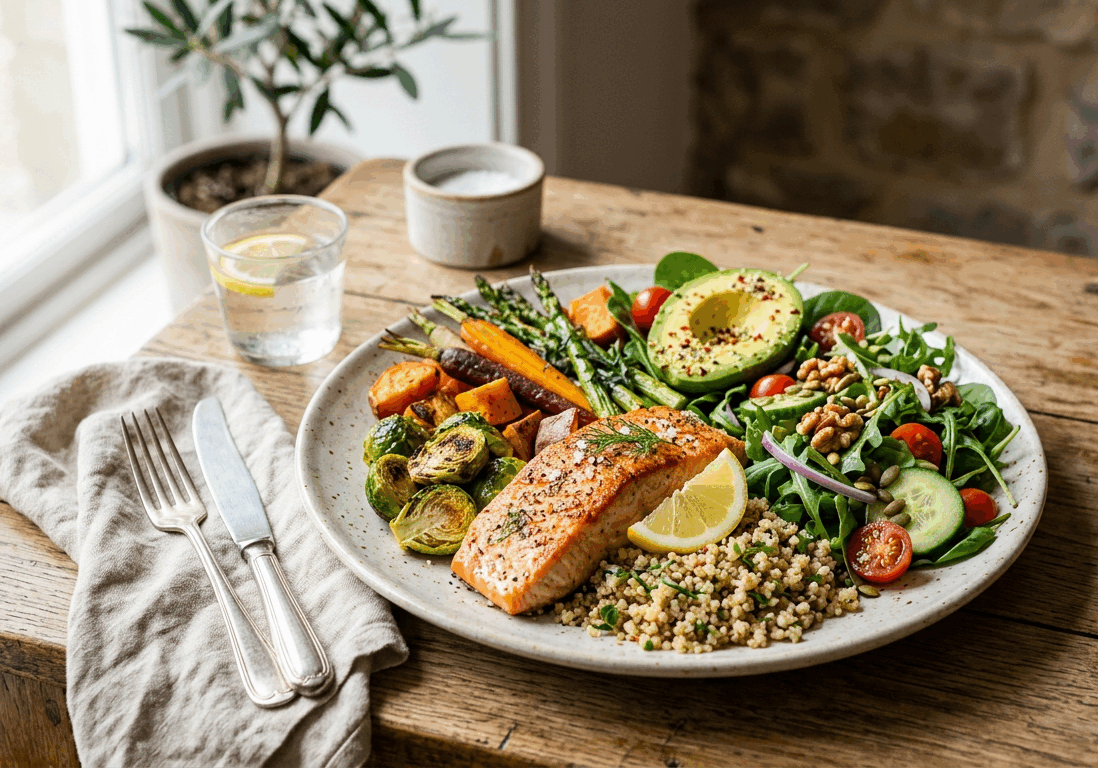
Eating once a day sounds extreme. For most people raised on the conventional wisdom of three meals plus snacks, the idea that a single daily meal could be not just sustainable but beneficial runs against everything they have been told about nutrition.
And yet OMAD, which stands for one meal a day, has a growing body of practitioners and a reasonable amount of science behind it. Understanding what actually happens physiologically when you eat once a day makes it much easier to evaluate whether it is something worth trying or something to avoid.
The Basic Physiology
When you eat, your body releases insulin to manage the incoming glucose and nutrients. As long as insulin is elevated, your body prioritizes storing energy rather than burning stored fat. This is normal and healthy in the short term. The problem for most people is that insulin rarely gets a chance to fully drop, because eating happens frequently throughout the day.
With OMAD, you eat once, insulin rises, the meal is processed, and then insulin drops back to baseline and stays there for approximately 23 hours. During those 23 hours, several things happen: fat metabolism increases significantly, the body undertakes cellular repair processes that require a low-insulin environment, mental clarity often improves, and hunger, surprisingly to most people who try it, tends to diminish rather than increase after the first week or two of adaptation.
What the Body Does During a 23-Hour Fast
The first several hours after your meal are spent digesting and processing nutrients. Insulin is elevated during this window. After roughly four to six hours, depending on what and how much you ate, insulin begins to drop.
As insulin falls, the body begins to mobilize stored fat for fuel. Around the 12 to 16-hour mark, a process called autophagy ramps up significantly. Autophagy is the body's cellular cleaning mechanism, where old and damaged cell components are broken down and recycled. Research on autophagy has grown substantially in recent years, and there is good reason to believe that this process has significant implications for aging, disease prevention, and overall cellular health.
By hour 20 to 23, growth hormone levels are often elevated, which supports muscle preservation and fat metabolism. Mental clarity tends to be at its sharpest for many OMAD practitioners during the late fasting period, which runs counter to the intuition that hunger would impair cognitive function.
Concerns Worth Taking Seriously
OMAD is not appropriate for everyone. People with a history of disordered eating should approach any form of extended fasting with caution and ideally with professional guidance. Pregnant or breastfeeding women should not restrict eating to a single daily meal. Anyone on medication that requires food should consult their doctor before attempting OMAD.
There is also a practical nutritional concern: fitting adequate protein, micronutrients, and total caloric needs into a single meal is genuinely challenging. People who undereat on OMAD, intentionally or not, over a sustained period can lose muscle mass and experience nutritional deficiencies. The meal matters enormously. It needs to be large, nutrient-dense, and high in protein.
The Adaptation Period
The first one to two weeks of OMAD are the hardest. Hunger tends to be intense, energy can be unpredictable, and the social difficulty of eating only once a day becomes apparent quickly. Most people who try OMAD and quit do so during this window.
Those who push through the adaptation phase consistently report a shift. Hunger signals reorganize around the single meal time, energy stabilizes and often improves, and the simplicity of not thinking about food for most of the day becomes a significant quality of life benefit rather than a deprivation.
Is OMAD Right for You?
OMAD is at the more intensive end of the fasting spectrum. It produces significant results for people it suits, but it is not necessary for most people to achieve their health goals. The 16:8 method or the 5:2 approach will produce meaningful results for most people with considerably less adjustment.
OMAD tends to work best for people who have already been doing some form of intermittent fasting, are comfortable with extended periods without eating, have straightforward schedules that allow a single large meal, and are not in a life stage that requires more frequent eating.
If you are curious, the most sensible approach is to try 16:8 first, then 18:6, and see how your body responds before moving to a single daily meal. Gradual progression is both safer and more likely to produce a sustainable habit than jumping directly to the most extreme version.





This site shares personal research and opinion, not medical advice. It also contains affiliate links, meaning we may earn a commission if you purchase through our links, at no additional cost to you. Always consult your doctor before making any health changes.
©2026 Total Life Sync | All Rights Reserved