
Total Life Sync
Low-Impact Workout Benefits: The Smarter Exercise Option Most People Overlook
Low-impact exercise carries a reputation problem similar to walking. It sounds like exercise for people who cannot do real exercise. Something prescribed during injury rehabilitation or recommended to elderly people who need to be careful. The association with limitation rather than choice keeps many people from considering it seriously, even when it would be exactly the right approach for their situation.
This mischaracterisation has real consequences. Many people push through high-impact exercise that is causing cumulative joint stress, developing chronic injuries that eventually sideline them entirely, when a shift to lower-impact modalities would have produced comparable fitness results with a fraction of the wear.
What Low-Impact Workout Training Actually Means
Low-impact exercise means exercise where at least one foot remains in contact with the ground or support surface at all times, or where the forces transmitted through joints are significantly reduced compared to running, jumping, or high-impact aerobics. Walking, cycling, swimming, rowing, elliptical training, yoga, and resistance training with controlled movement are all low-impact. Low-impact does not mean low-intensity. You can work extremely hard on a bike, in a pool, or on a rowing machine. The intensity is controlled by effort. The impact is reduced by the mechanics of the movement.
The Key Low-Impact Exercise Benefits and Who Gains Most
People with existing joint issues benefit most obviously because low-impact exercise allows them to maintain or improve fitness without aggravating affected joints. But this group is not the only one. People over 40 benefit from reducing cumulative joint stress even without existing injuries, because joint resilience decreases with age. People who are significantly overweight benefit because ground reaction forces in running and jumping scale with body weight. People who have been chronically overtrained benefit from the lower recovery demand.
People building a long-term fitness habit benefit most of all, because low-impact exercise is sustainable across decades in a way that consistently high-impact training often is not.
The Most Effective Low-Impact Options for Exercise Without Joint Pain
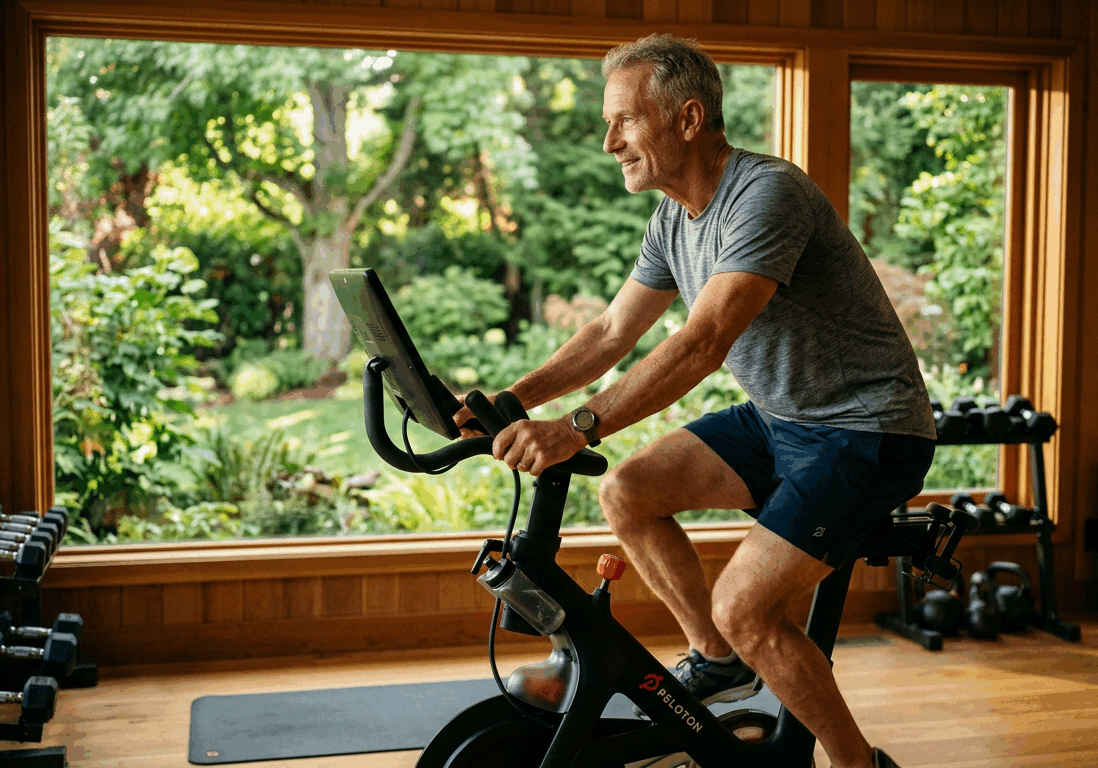
Swimming and water-based exercise essentially eliminates joint impact while allowing high cardiovascular and muscular effort. It is particularly valuable for people with joint pain severe enough to make most land-based exercise difficult. Cycling produces excellent cardiovascular conditioning with minimal joint stress. Rowing engages the entire body, combining cardiovascular and strength stimulus with very low joint impact when performed with correct technique. Resistance training with controlled movement is fundamentally low-impact and builds the muscle mass that protects joints by improving the strength of surrounding structures.
Building a Sustainable Long-Term Approach
The goal of exercise is not to prove something in the short term. It is to maintain physical capacity across your entire life. An exercise approach that causes chronic injury and requires extended recovery periods is not better than a lower-impact approach that can be maintained consistently year after year. The cumulative effect of consistently sustainable exercise almost always outperforms the cumulative effect of more intense but more frequently interrupted training over any meaningful time horizon.











This site shares personal research and opinion, not medical advice. It also contains affiliate links, meaning we may earn a commission if you purchase through our links, at no additional cost to you. Always consult your doctor before making any health changes.
©2026 Total Life Sync | All Rights Reserved