
Total Life Sync
The Supplements Actually Worth Taking. And the Ones to Skip
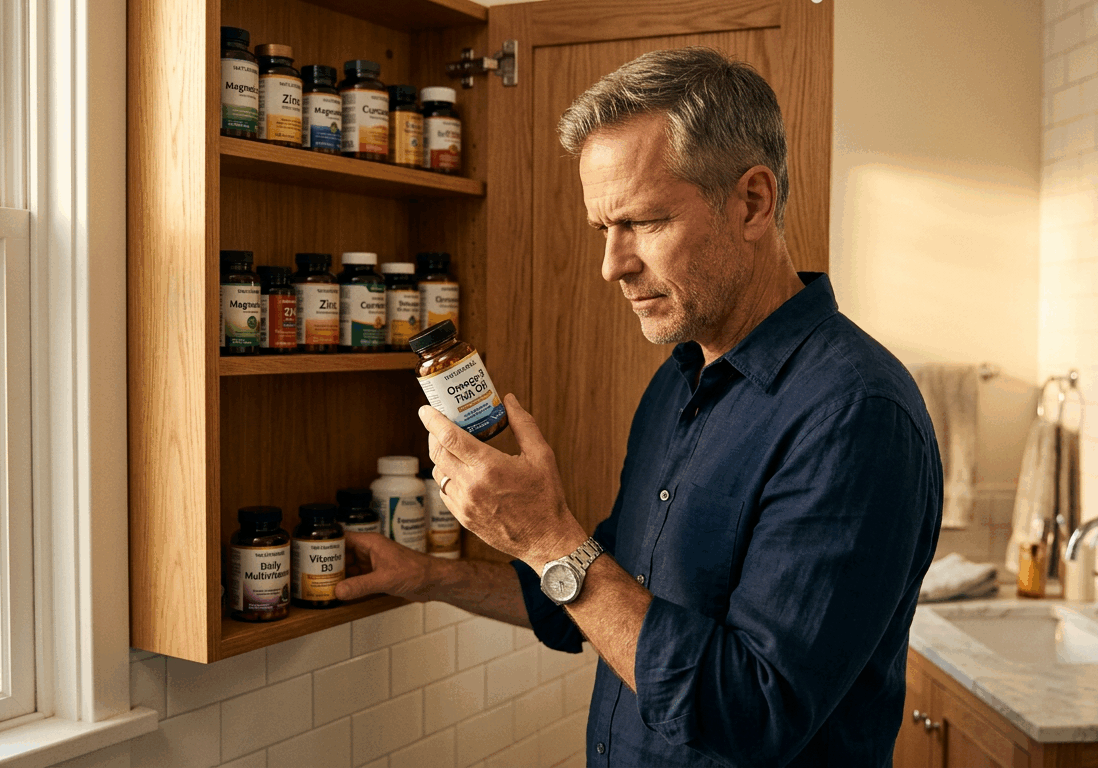
The supplement industry generates over $150 billion annually worldwide, built substantially on the willingness of health-conscious people to pay for products whose benefits range from well-established to entirely unproven. Navigating this landscape requires some basic principles for distinguishing supplements worth taking from those worth skipping, and understanding that most of the work of health comes from the fundamentals, not from anything in a capsule.
With that caveat firmly in place, certain supplements have genuinely strong evidence and address genuine widespread deficiencies. Others have weak or mixed evidence despite significant marketing. And the distinction matters both for health outcomes and for how you spend your money.
The Best Supplements for Health: Strong Evidence, Common Deficiency
Vitamin D is the supplement with perhaps the strongest case for most adults in developed countries. Vitamin D deficiency is genuinely widespread, affecting an estimated 40 to 50 percent of the general population and a higher percentage of people with limited sun exposure, darker skin tones, or who spend most of their time indoors. Vitamin D is involved in immune function, bone density, mood regulation, and multiple inflammatory pathways. Blood testing is available and provides clear guidance on whether supplementation is needed and at what dose. This is one supplement where the evidence for widespread deficiency is compelling and the evidence for benefit from correction is solid.
Magnesium is another nutrient in which deficiency is extremely common due to the combination of low dietary intake from processed food diets and depletion of magnesium from modern agricultural soils. Magnesium is involved in over 300 enzymatic reactions in the body, including those governing sleep, stress response, muscle function, and blood sugar regulation. Supplementation, particularly with forms like magnesium glycinate or magnesium citrate that are well absorbed, is low-cost, safe within normal doses, and addresses a deficiency that dietary change alone often cannot fully correct.
Omega-3 fatty acids in supplement form are worth considering for people who do not regularly eat fatty fish. EPA and DHA, the two marine omega-3s with the strongest evidence for anti-inflammatory and cardiovascular benefit, are difficult to obtain in adequate amounts from plant sources alone. Fish oil or algae-based omega-3 supplements provide these in concentrated, bioavailable form.
Which Supplements Actually Work: Moderate Evidence
Creatine has strong evidence for muscle strength and power in athletic contexts, and emerging evidence for cognitive benefits, particularly in older adults. It is one of the most studied supplements in existence and has an excellent safety profile at standard doses. For adults over 40 concerned with muscle preservation and cognitive health, it is worth considering.
Collagen peptides have growing evidence for joint health, skin elasticity, and tendon recovery. The evidence is not as strong as for the supplements above, but it is more substantial than the evidence for most beauty and joint supplements on the market.
Supplements to Skip: Weak Evidence Despite Strong Marketing
Most multivitamins provide limited benefit for people eating a reasonably varied diet. The nutrients they provide in their most common forms are often poorly absorbed, and several large studies have failed to show meaningful health benefits from standard multivitamin use in people without specific deficiencies. Antioxidant supplements in high doses, including high-dose vitamin E and beta-carotene, have shown neutral or even harmful effects in some clinical trials, in contrast to the antioxidants obtained from whole food which consistently show benefit. Most proprietary herbal blends, weight loss supplements, and performance products have very limited evidence and high marketing-to-evidence ratios.
The principle worth applying: if a supplement addresses a documented deficiency or has a specific, well-studied mechanism with consistent clinical evidence, it is worth considering. If it is selling a broad wellness promise with limited specific evidence, the money is better spent on food.











This site shares personal research and opinion, not medical advice. It also contains affiliate links, meaning we may earn a commission if you purchase through our links, at no additional cost to you. Always consult your doctor before making any health changes.
©2026 Total Life Sync | All Rights Reserved